English
 Spanish
 Portuguese
 Arabic
 Haitian Creole
 Chinese (Traditional)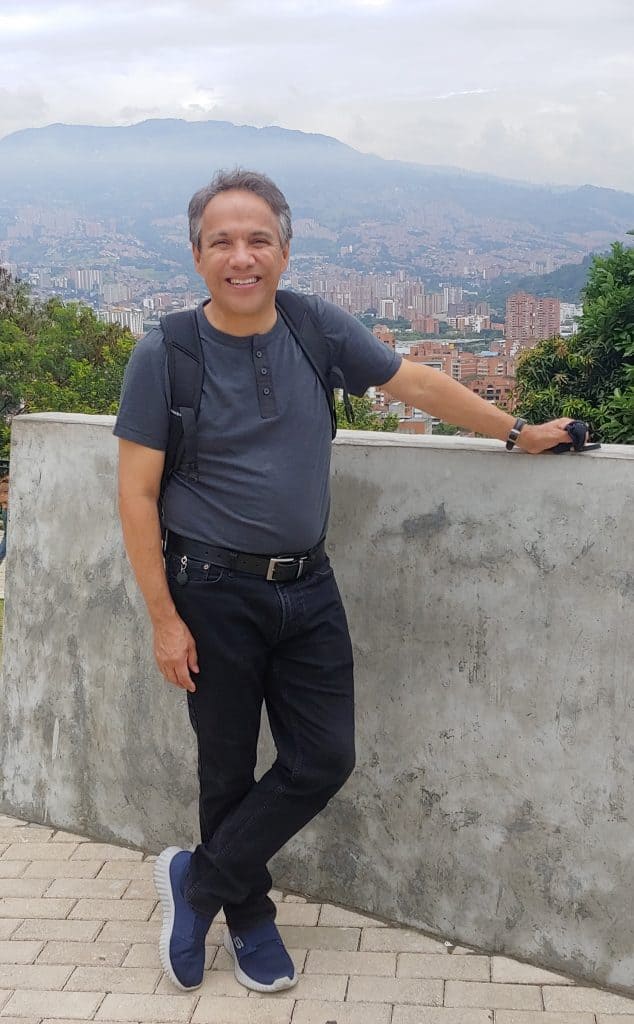

Special to The Advocate
For the past five years, Malden resident Ricardo L. Franco, 61, has served as a Court Appointed Special Advocate (CASA) through Boston CASA, a nonprofit organization that recruits, trains and supports volunteers to advocate for children in Suffolk and Middlesex Counties who have been removed from their homes due to abuse and neglect. A CASA goes through over 30 hours of training before being sworn in by a judge, and the curriculum emphasizes the cultural differences the CASAs will encounter with the children and youth they will be advocating for.
Born and raised in Colombia, Ricardo has spent 15 years in social work, including his current role as Associate Director at the Massachusetts Adoption Resource Exchange. He views it as his mission to connect his background to help children in the most vulnerable circumstances. Of his four cases as a CASA, three have involved Latin American families. It’s no coincidence: children of color are overrepresented in the foster care system.
“So many times, professionals make assumptions about ‘best interest’ without understanding the culture,” Franco said. “How do you know what’s best for a child if you don’t understand their family’s values, their background, their fears?”
Ricardo has seen stressed parents lose their children over misunderstandings. Many Latino families don’t realize that the people they turn to for help (school counselors, doctors, social workers) are mandated reporters. In one case, a desperate mother vented to a school counselor, saying, “I don’t know what to do. This child is making me crazy.” By that afternoon, police and paramedics had arrived. The mother was taken for a psychiatric evaluation, and her son was removed from the home.
What looks like neglect to a caseworker unfamiliar with a family’s background is often just poverty or a cultural difference. “So many times, children shouldn’t be removed in the first place,” he said. “These are stressed parents who just need support and resources.”
Being a CASA allows Ricardo to be in the room when decisions are made and to offer perspective that might otherwise be missing. “I can show the judge all the beauty and possibilities with a family,” he said. “I can say, ‘Please keep in mind where this child comes from. Let me explain the reasons behind these behaviors.’”
Ricardo hopes his story inspires others, especially Latino professionals and people of color, to consider becoming a CASA. “We need representation in these rooms,” he said. “If you understand the nuances of the culture, you should be at the table.”