English
 Spanish
 Portuguese
 Arabic
 Haitian Creole
 Chinese (Traditional)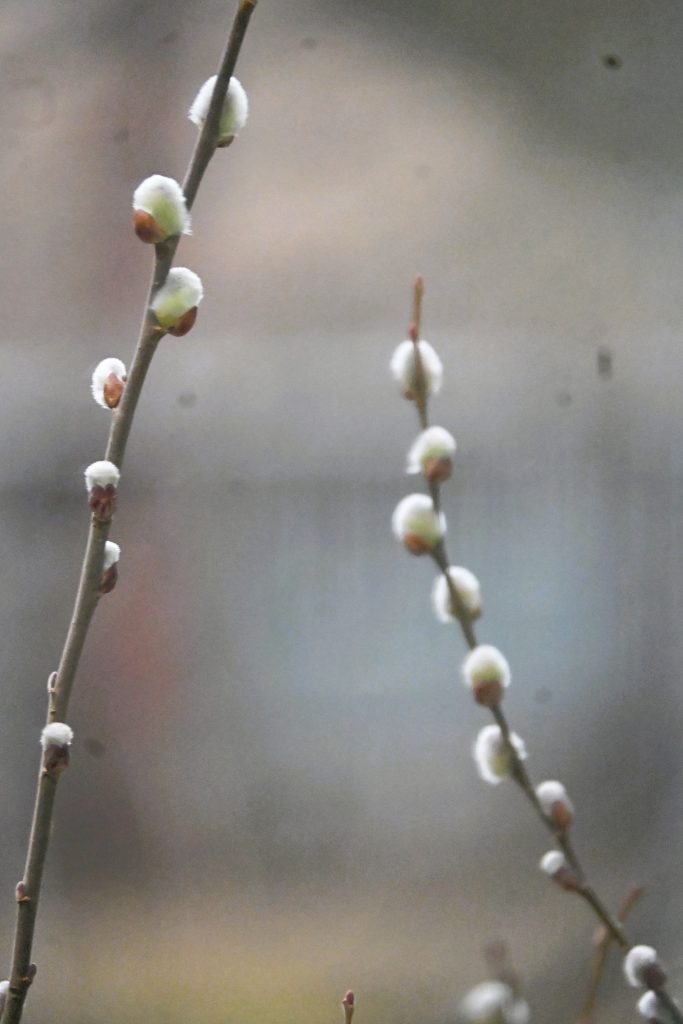

Here’s what’s blooming in town this week to make your walks more enjoyable
By Laura Eisener
Crocuses (Crocus spp.) are among the earliest flowers to bloom in spring in our climate. Native to the Near East, they are usually classified as hardy bulbs by nurseries, but a botanist would say that crocuses grow from corms rather than true bulbs. Corms differ from bulbs in that they are swollen stem portions, while bulbs actually have dormant layers of leaves and often a flower bud preformed before they “sprout” in the spring. Since chlorophyll has not developed in either one, they do not look green until they begin to emerge from dormancy in spring. Corms contain starch, which serves as food for the sprouting plant until the leaves emerge into the sunlight and are able to photosynthesize.
True bulbs, corms and tubers are all forms of geophytes, which evolved in climates that have severe conditions – usually very cold or very dry – during part of the year so that they thrive by actively growing only during milder weather. Most of our best-known hardy bulbs are indigenous to the Middle East. Tender bulbs and corms, such as gladiolus, which usually would not survive being outside in winter, are also considered geophytes. The tender geophytes must be lifted and stored in a freeze-free location for the winter. For practical purposes, hardy bulbs, corms and tubers are usually planted when dormant in fall, and once the conditions are right in the spring will grow and flower. Snowdrops usually are the first to bloom, sometimes even opening during warm spells in winter, which we really did not have much of this year. Crocuses are usually next, and the blossom time of crocus and snowdrop can overlap, as is happening this year. The snowdrops (Galanthus spp.) have very small true bulbs. In general, geophytes’ greatest enemy is too much water. They need good drainage, so avoid planting them in heavy clay soil, over solid bedrock, which does not permit good drainage, in swampy areas or in containers without holes or other openings that allow excess water to drain away.
Many geophytes reproduce more effectively from offsets (bulbs), while the corms produce smaller versions of themselves, known as cormels, attached to the base of the “parent” corm. These new plants will be clones with the same DNA as the “parent,” unlike new plants produced by seeds, which will usually have some DNA from two different parents.
When I was growing up in Saugus, my family did not have snowdrops, so the first flower to bloom in our garden was crocus. We had a few little clumps that included purple, yellow and white varieties, mostly Dutch hybrids. While crocuses do tend to increase over time, there are several small animals who like to eat the flowers or corms. Voles will tunnel underground to eat the corms, and rabbits and mice are very fond of the flowers. Rabbits and other small animals have increased in numbers over recent decades, so crocuses are not always successful. However, despite seeing the signs of rabbits gnawing, and occasionally even seeing them in the garden during the winter and early spring, some of my crocuses survive.
Last Saturday, there were some sturdy clumps of dark purple crocus at St. John’s Church on Central Street. The flowers were admired by many when they went to the Artisan Marketplace Saturday – from certain angles, the largest clump of blossoms looked heart shaped!
Pussy willows (Salix spp.) are blooming now, and so are some Asian witch hazels (Hamamelis spp.). Pussy willows are wind-pollinated flowers, which do not need to be showy or fragrant because they do not need to attract pollinators. At this time of year, the cold weather and limited flowers make survival challenging for them, so it is just as well that the wind is all that is needed. The strong winds of Monday’s storm were very beneficial for wind-pollinated flowers like the catkins of willow, since staminate (male) and pistillate (female) flower parts grow on separate shrubs and trees, so the pollen needs to get to a different plant, not just to flowers on other branches of the same plant. Pussy willows are usually grown for their showy catkins, and while the male and female catkins are similar, the males are a bit larger and more showy. For this reason, most gardeners who purchased pussywillow plants have staminate ones, which will never produce any kind of fruit or seed on their own.
Most pussy willows sold in nurseries are a European variety sometimes called French pussywillow or goat willow (Salix caprea) because they are easy to grow in average garden soils and can quickly reach the stature of a small tree even if branches are regularly harvested for bouquets. It is probably good that they are unlikely to produce seedlings, so they are much less likely to become invasive. We also have a slightly smaller native species, common pussywillow (Salix discolor).