English
 Spanish
 Portuguese
 Arabic
 Haitian Creole
 Chinese (Traditional)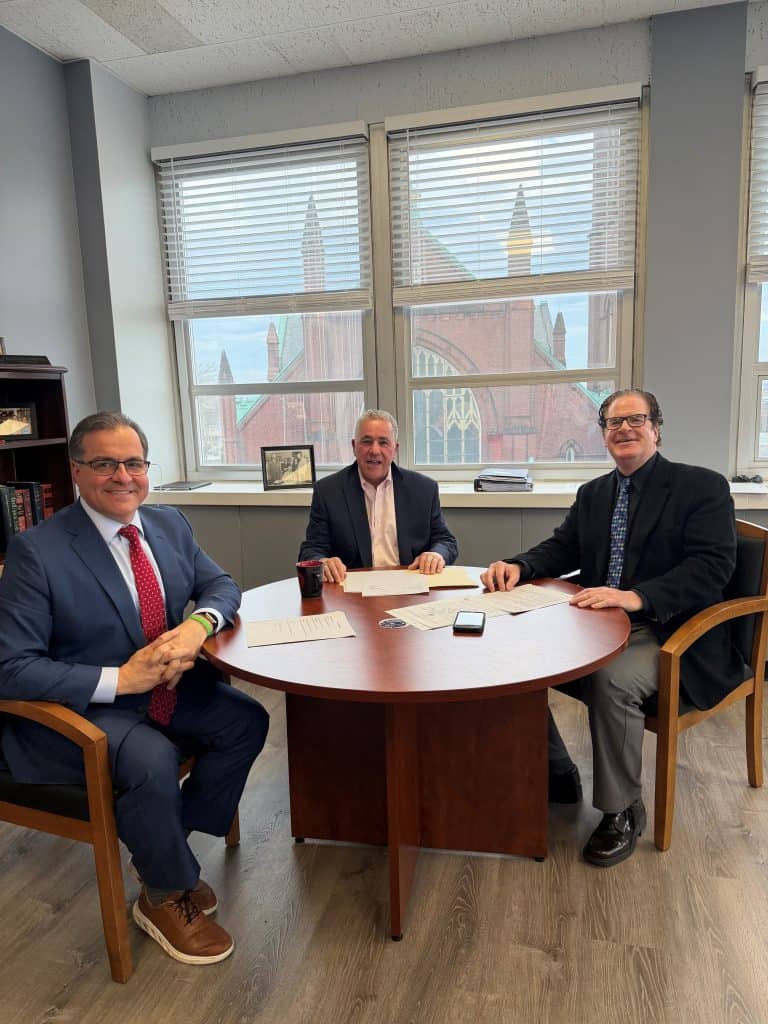

Secured funds for Everett Square redesign and reconstruction
Special to The Advocate
On March 18, 2026, Rep. Joe McGonagle, along with his colleagues in the Massachusetts House of Representatives, passed (150-3) a $1.8 billion supplemental budget that invests $885 million in public transportation and $417 million in public education and funds several Fiscal Year 2026 deficiencies. The supplemental budget also includes the tax conformity legislation filed by Governor Maura Healey that delays the Commonwealth’s alignment with the corporate tax changes passed by Congress in the One Big Beautiful Bill Act (OB3) last year. McGonagle procured $300,000 for redesign and reconstruction initiatives in Everett Square.
“I’m grateful for the opportunity to bring back money to Everett to invest in downtown, our infrastructure and our community,” said McGonagle. “We are in times of political and economic uncertainty, but I have great trust in the leadership in Massachusetts to keep us thriving. This money will be used to revitalize Everett Square for generations to come. I’m grateful for my partnership with Mayor Van Campen and his vision for our city. Together, we will keep Everett growing strong. I am also grateful to Speaker Mariano and Chair Michlewitz for their commitment to the Commonwealth.”
“I am excited that Rep. McGonagle was able to secure these funds to support an important community project,” said Mayor Robert Van Campen. “Revitalizing Everett Square has been a community priority for many years and is something I want to tackle early in my term. I am hopeful we can get this project moving quickly in order to achieve real progress. I am appreciative of Representative McGonagle’s efforts here and I look forward to working with him to make Everett the best place in which to live, work and raise a family.”
“From significant investments in public transportation and public education, to support for DTA caseworkers and expenses related to the World Cup, to fiscally prudent tax conformity measures – this legislation is representative of the responsible approach that the House will continue to take as we navigate a period of significant economic uncertainty,” said House Speaker Ronald J. Mariano (D-Quincy). “I want to thank Chairman Michlewitz for his hard work, as well as all my colleagues in the House for recognizing the importance of the investments and reforms that this legislation makes.”
The bill delays conforming to the federal corporate tax changes that were passed by Congress in the OB3 Act last year, which will represent approximately a $400 million revenue loss for the Commonwealth when fully implemented. Under the bill, the Research and Experimental expense deduction will be delayed one year; the deductions for the Modification of Business Interest, Depreciable Asset Expensing and Qualified Production Properties will be delayed two years; and the Modification of Qualified Opportunity Zone Investments program will also be delayed two years. However, should the ballot question to lower the state income tax from five percent to four percent pass in November, which would result in a $5 billion revenue loss when fully implemented, the Commonwealth would permanently decouple from these tax credits, preventing them from going into effect.
The House’s $1.8 billion supplemental budget is funded in part by $1.3 billion from excess Fair Share surtax funds to invest in public transportation and education. Highlights include:
- $885 million (M) towards transportation:
⚬ $740M towards the MBTA
w $525M for the Deficiency Reserve
w $125M for the Workforce & Safety Reserve
w $60M for physical infrastructure, focusing on the core subway system
w $20M for low-income reduced fares
w $10M for water transportation infrastructure
⚬ Other transportation items include:
w $50M for snow and ice costs
w $25M for Regional Transit Authorities workforce development
w $30M to fund the Sustainable Aviation Fuel Credit
w $30M for MassDOT Service Investments
- $417M towards education:
⚬ $150M for Special Education Circuit Breaker costs
⚬ $150M for Early Education Child Care costs
⚬ $38.7M for the EEC income eligibility waitlist
w Includes $8M for child care for providers and $7.5M for the loan forgiveness program for providers
⚬ $20M for Green School Works program to help schools with clean energy upgrades
⚬ $18.3M for Financial Aid Supplements
⚬ $20M endowment Match for UMass and other state colleges and universities
⚬ $5.1M for Tomorrow’s Teachers Loan Forgiveness program
⚬ $5M for ESOL Services Waitlist
The bill also allocates $507M from the General Fund:
- $300M for the Group Insurance Commission
- $54.4M for sheriffs, representing half of the deficiency
⚬ Requires reporting on the expenses of proposed usage of the funds
- $41.6M for DTA caseworkers
- $10M for FIFA Boston for World Cup–related expenses
The bill also includes the following outside sections:
- Food Donation Tax Credit: Establishes this for farm businesses based on the amount of food donated to a nonprofit food distribution organization. The credit is capped at $5,000 annually per individual.
- Sustainable Aviation Fuel Credit: Allows taxpayers to take a credit against the tax imposed on fuels used for aircraft propulsion and, subject to limitation, requires the amount of credit per gallon of sustainable fuel to increase by $0.015 for each additional one percent reduction in life-cycle greenhouse gas emissions above 50 percent. The credit is capped at $10M total for all cumulative tax credits over a fiscal year.
- Ratifies eight Collective Bargaining Agreements
According to New England Public Media on April 6, 2026, “The Senate dropped their proposed supplemental budget for this year, late last week. Senators are advancing a $1.8 billion spending plan that differs from the House plan on surtax allocations, MBTA funding and tax policy.”