English
 Spanish
 Portuguese
 Arabic
 Haitian Creole
 Chinese (Traditional)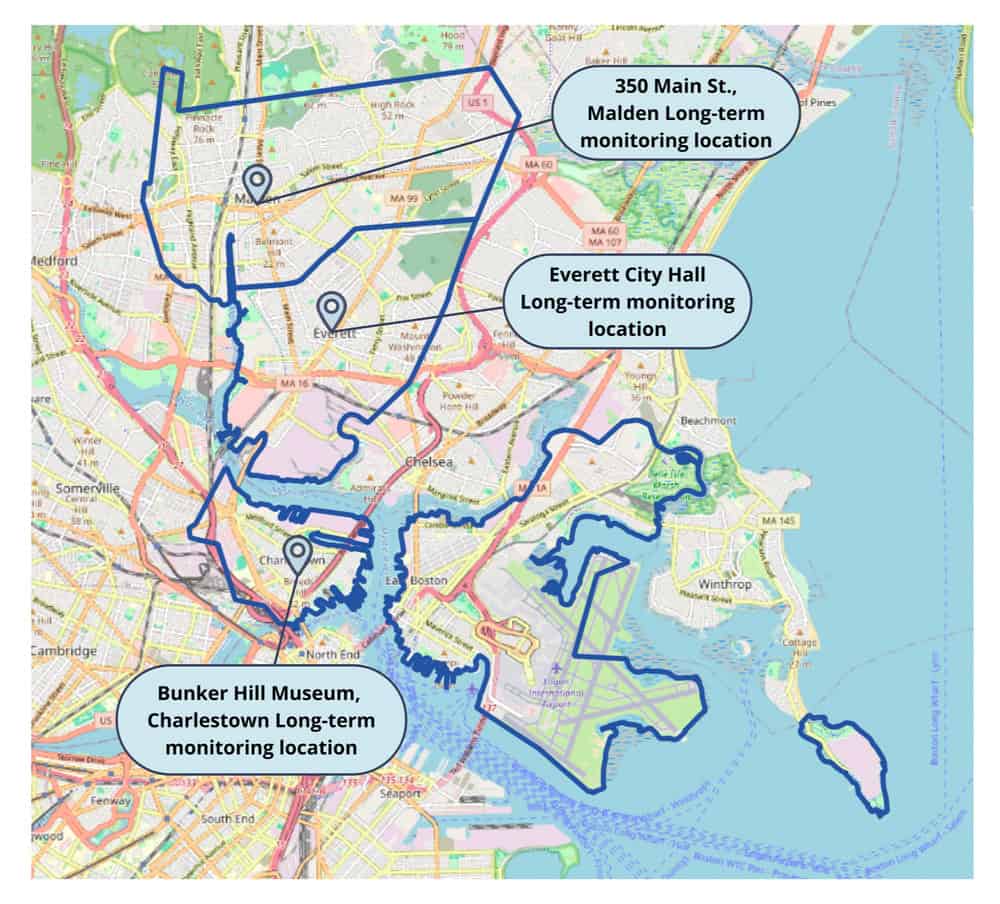

Everett uses data to inform solutions, reduce exposure and protect student health
Special to The Advocate
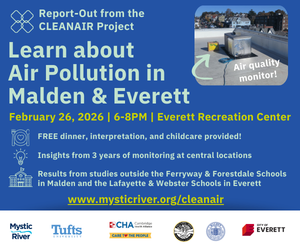
A new regional study examining air quality in the Lower Mystic area is helping communities, including Everett, better understand how traffic patterns impact air pollution near schools and where targeted improvements can make a difference. The Community-Led Improvement of Air Quality in the Lower Mystic (CLEANAIR) study, which was funded by the Environmental Protection Agency (EPA) and led by the Mystic River Watershed Association (MyRWA), analyzed transportation-related air pollution (TRAP) across Everett, Malden, Charlestown and East Boston.
Findings from the three-year study show that vehicle-related air pollution levels increase during school pick-up and drop-off hours across the region, with schools experiencing two to three times more pollution compared to in non-school periods. The data reinforces what many urban communities already experience: Traffic congestion plays a direct role in localized air quality.
In Everett, monitoring at school sites identified higher concentrations of ultrafine particles (UFP) compared to readings from the City Hall central monitoring location. UFPs are commonly associated with vehicle emissions, as well as broader regional sources, such as air traffic, industry and other urban activity.
The study also points to regional factors influencing air quality, including wind patterns and proximity to major transportation infrastructure. Elevated levels observed during certain wind conditions suggest that sources beyond any single community contribute to overall air pollution in the Lower Mystic area.
Everett is designated as an “environmental justice” community, meaning residents have historically faced a disproportionate share of environmental burdens. City leaders say studies like CLEANAIR are critical tools for continuing to advocate for resources, inform policy decisions and advance long-term environmental improvements.
“This study helps put data behind what many communities like Everett have long understood,” said Mayor Robert Van Campen. “Four times the pollution at our schools compared to City Hall demands action. We are committed to working with regional partners, state agencies and local organizations to reduce exposure, improve air quality and protect the health of our residents, especially our students.”
Because vehicle traffic during school hours is a primary driver of the elevated pollution levels found in the study, reducing idling near schools is one of the most direct actions the community can take. Massachusetts law already prohibits unnecessary idling. The City is planning a public awareness campaign to help residents understand the health risks of vehicle exhaust and simple steps they can take, such as turning off engines when parked near schools. MyRWA also encourages broader community-level actions to reduce exposure, including using alternative modes of transportation when possible and supporting the expansion of green spaces that help filter pollutants.
City officials say they will continue reviewing the findings and working with partners to identify practical steps that can improve air quality at the neighborhood level.
For more information and to view the full CLEANAIR report, visit mysticriver.org/cleanair.