English
 Spanish
 Portuguese
 Arabic
 Haitian Creole
 Chinese (Traditional)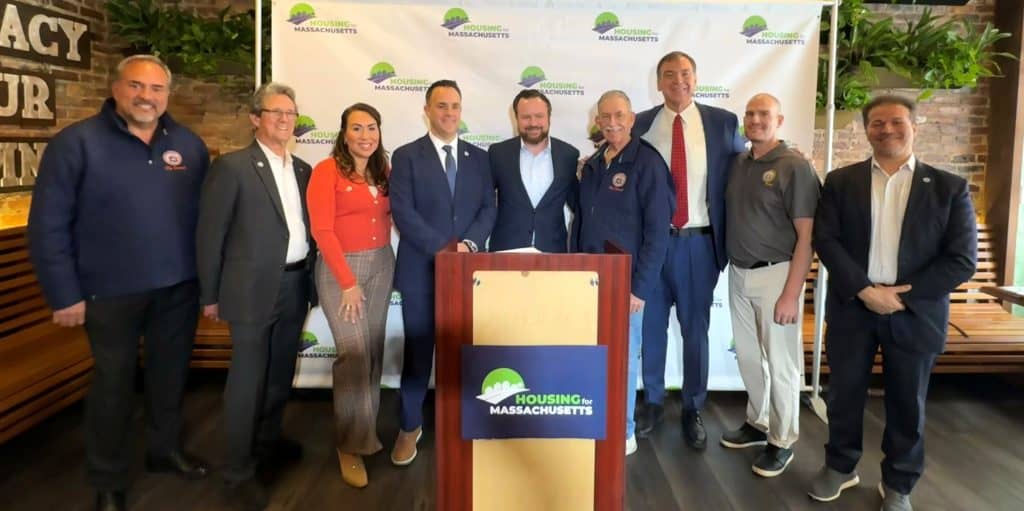

At an event in Revere, they outlined how rent control ballot measure would harm Revere
Special to The Advocate
Last Thursday, at Valsos Table & Bar, Mayor Patrick Keefe, Jr. headlined a gathering of Revere elected officials and community leaders to announce shared opposition to the proposed rent control ballot question. The event followed the announcement earlier in the week that a dozen mayors and three dozen other municipal elected officials were opposing the ballot question, with over 10 elected officials from Revere alone, citing concerns about the one-size-fits-all housing policy’s impact on municipal budgets and housing creation. The policy would repeal a law passed by voters in 1994 and eventually would apply to virtually all privately owned rental housing across Revere that is not owner occupied.
“This proposal would remove local control and implement one of the strictest statewide rent control policies across the Commonwealth, ignoring the unique needs of the diverse communities like Revere that make up our state,” said Mayor Keefe. “Across Revere and the Commonwealth, we have been working feverishly to increase housing production – encouraging development, supporting density, and getting more shovels in the ground. Rent control would stall construction, discourage new development, and ultimately reduce the housing supply. When development slows or stops, affordability gets worse.”
“I see the issue of rent control from every angle. I grew up in Section 8 housing. I’ve been a renter. And today, I’m a homeowner, property owner and manager, and real estate professional,” said Pratt Properties CEO Peggy Pratt, who is a Real Estate Broker and Revere Zoning Board Member. “This proposal will disproportionately affect small, local landlords – not large corporations. We are the ones who maintain properties, work directly with tenants, and provide a significant share of the housing in our communities. We are also the ones who try to keep rents low and manageable for our neighbors.”
A new study from the Center for State Policy Analysis at Tufts found rent control would eliminate $300 billion of Massachusetts property values over the next decade, crushing municipal budgets and forcing local leaders to cut back on key services or drastically shift the tax burden to homeowners and condo owners to maintain investments in education, infrastructure and public safety. In Revere, the study predicts, the city would lose 15.47% of its assessed property value over the next decade.
“Our schools already operate on tight margins, and we rely heavily on local property tax revenue to fund classrooms, support teachers, and provide services to students,” said School Committee Member Alex Rhalimi. “If this policy leads to declining property values, as shown by a recent study from the Center of State Policy Analysis at Tufts, it will directly impact school funding. That will lead to difficult decisions: fewer resources, delayed investments, and increased pressure on educators and students.”
The proposed ballot question would cap rental rate increases at the annual change in the Consumer Price Index, which has averaged about 2.58% over the past 20 years – with no exceptions for building renovations and no appeal process for property owners to recover costs for upgrades or improvements. That would be the lowest statewide cap in the United States. Unlike in other states, the Massachusetts proposal would also apply to vacant units, meaning that for property owners who kept rents lower for elderly or long-term residents, they will never be able to catch up to market rates when those homes are vacated.
“The only way out of our housing crisis is to build more supply to support our communities.” said State Representative Jeff Turco. “We should instead support policies that encourage housing production – expanding multifamily zoning and transit-oriented development, removing permitting barriers, and providing targeted assistance to those most in need.”