English
 Spanish
 Portuguese
 Arabic
 Haitian Creole
 Chinese (Traditional)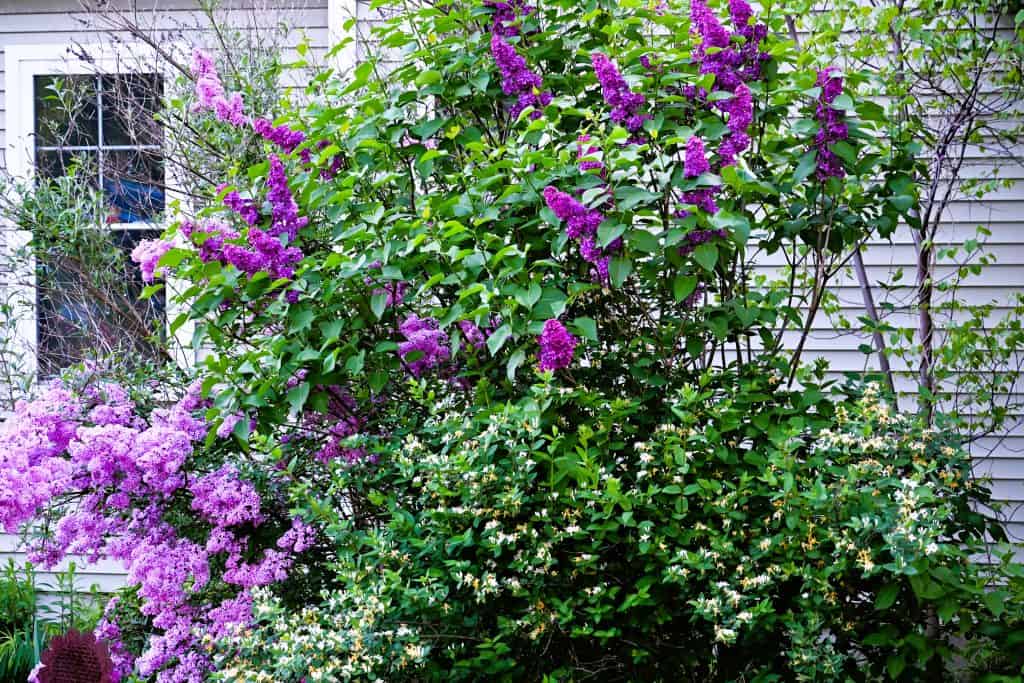

Here’s what’s blooming in town this week to make your walks more enjoyable
By Laura Eisener
Today is the International Day for Biodiversity! Observed annually since May 22, 1992, this year’s theme is “Acting Locally for Global Impact,” a reminder that small actions can have big results.
A key part of the Urban Tree Care class I teach at North Shore Community College each spring is a discussion of tree species selection for streets, parks and private properties. Avoiding monocultures, which is the planting of a single species over a large area and is the exact opposite of biodiversity, is an important strategy. Selection of a single tree species, such as American elm (Ulmus americana), which may be in fashion for a time, leads not only to boring and repetitive landscapes, but also to the spread of disease — such as Dutch Elm disease, which spread rapidly through streets and entire cities in the 20th century. The fungus spores were easily spread from tree to tree. The overuse of ornamental pear trees, especially the ‘Bradford’ variety of Callery pear (Pyrus calleryana ‘Bradford’), in the 1970s led to a different problem, as this tree seeded so readily it has now been declared invasive in Massachusetts and many other states. It can no longer be sold by nurseries. Overabundance of a single plant species to the exclusion of others will lead to problems spilling over in the animal world, too, as no single species provides food and shelter for all the wildlife indigenous to an area. Efforts today work hand in hand with last week’s Endangered Species Day (the third Friday in May each year), since maintaining biodiversity helps keep an environmental balance that provides support for a wide range of organisms.
Many Saugus gardeners have added the host plants of Monarch butterflies to their garden in recent decades to ensure the butterflies’ ability to reproduce and for the offspring to get the specific nutrients these plants provide, but it is also important to have a wide range of nectar producing plant species blooming throughout the growing season, since that’s what the adult butterfly feeds on to survive long enough to lay eggs. Host plants for monarch butterflies (Danaus plexippus) are several species of milkweed (Asclepias spp.). If they lay eggs in the wrong plant species, the caterpillars will not have appropriate food when they hatch and begin to eat the leaves. However, these host plants bloom later in the summer, and do not provide nectar in spring when the butterflies arrive here from the South.
One of the most popular showy and fragrant flowering plants, the common lilac (Syringa vulgaris), offers nectar to pollinators arriving in our area now. The fragrant lilac is one of the key spring plants to encourage many butterflies to linger. Tiger swallowtail butterflies (Papilio glaucus) are especially attracted to them. When the lilacs’ bloom is finished, other garden flowers must supply the butterflies’ needs until they begin their migration south once again.
The photo above shows two lilac varieties and a white Morrow’s honeysuckle (Lonicera morrowii) blooming in Lynnhurst. The dark purple lilac is a variety of common lilac (Syringa vulgaris ‘Charles Joly’), while the lighter purple one is a variety of Chinese lilac named by the Arnold Arboretum for its popular annual festival Lilac Sunday (Syringa chinensis ‘Lilac Sunday’). The honeysuckle was planted by a bird, which perched in one of the lilacs and “dropped” a seed after enjoying a feast of honeysuckle berries. This species has also now been declared invasive.
The birth flower of May is another flower known for its fragrance, lily of the valley (Convallaria majalis), which also attracts bees and butterflies.