English
 Spanish
 Portuguese
 Arabic
 Haitian Creole
 Chinese (Traditional)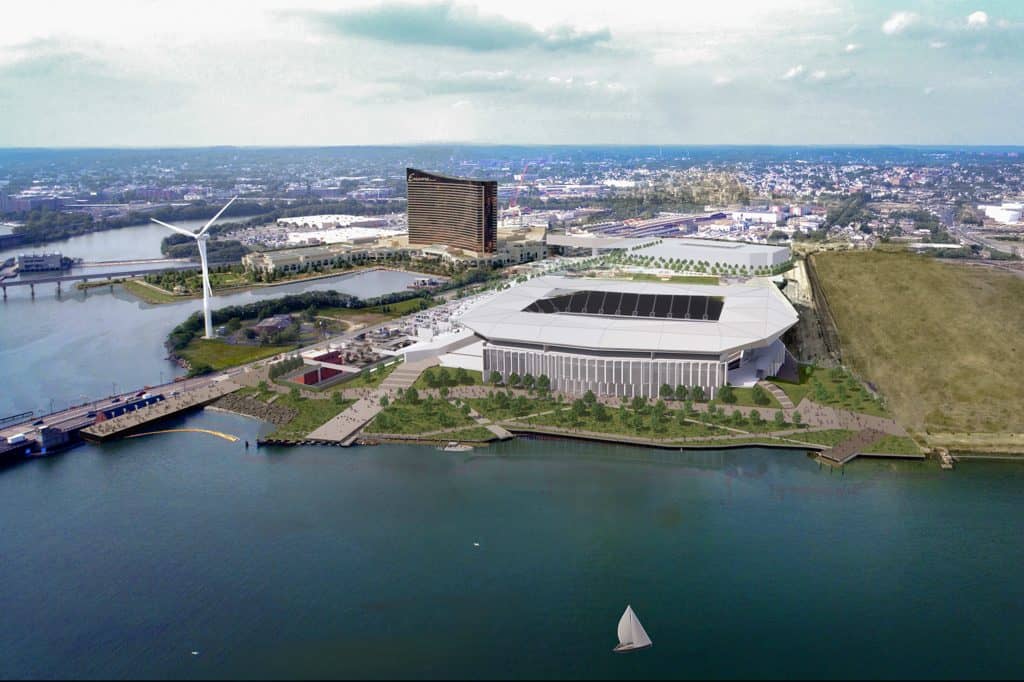

Special to The Advocate
After months of candid negotiations and ongoing community discussion, Mayor Carlo DeMaria and The Kraft Group have reached a community impact agreement related to the proposed New England Revolution soccer stadium project in Everett. This milestone brings the city one significant step closer to a transformative project including a 25,000-seat stadium and vibrant, publicly accessible waterfront park on the former Mystic Generating Station site.
The proposed stadium would be a privately funded investment that, pending all necessary state and local permits and approvals, would transform a long-blighted industrial property into an active destination for professional sports, concerts, public markets, and community-driven programming. Plans also include a riverfront promenade and open space designed to reconnect residents with the waterfront and create new areas for everyday use.
Under the terms of the 20-year agreement, the City of Everett will receive an estimated $91.7 million in total community value, delivered through direct payments, infrastructure investments, and other community benefits. This amount is separate from an additional commitment of an estimated $100 million by The Kraft Group dedicated exclusively to environmental cleanup and mitigation at the contaminated former power plant site, subject to permits and approvals required.
In addition to mitigation and infrastructure investments, the agreement includes direct financial support generated by stadium operations. The City will receive $2.25 for every ticket sold. Based on current projections, approximately 418,000 soccer tickets and an additional 520,000 event tickets are expected to be sold annually, with all payments reported as revenue to the City’s general fund.
“I have always known that the residents of Everett deserve more than the inequitable burden of smokestacks and contaminated former industrial land that we have been asked to bear for too long. My vision for Everett has been for our city to have a vibrant waterfront with access for our residents, new clean industries that bring our residents construction and long-term job opportunities, improved public transit options, and new revenue sources to support city services,” said Mayor Carlo DeMaria.
He continued, “For months, we had honest conversations about what this project should look like and what Everett deserves as the host community. We were clear from the start that any stadium proposal had to deliver real, lasting benefits for our residents. Reaching this agreement means we’re moving forward in a way that respects our community, gives our residents access to a clean, accessible waterfront, and creates something we can be proud of for generations.”
Mayor DeMaria added, “I have spent the last 18 years fighting for the future that Everett deserves. I had this vision of what I knew was possible in Everett and worked hard to find private investors who were willing to invest what has resulted in billions of private dollars to achieve our community’s potential. I want to thank the community members, including Senator DiDomenico, who have believed in this vision of a better future for Everett by participating in the process, asking tough questions, and fighting with me to achieve an outcome that reflects what Everett deserves.”
In a statement released by Sen. DiDomenico following the announcement this past week, it read: “The language we passed into law made clear that the communities most affected by this project should have a voice in how this development moves forward,” said Senator Sal DiDomenico. “I want to thank the cities of Everett and Boston, and the Kraft Group for coming together on agreements that address the needs of the communities and will have a positive and lasting impact in both Everett and Charlestown. I am happy to see the Revolution soccer stadium reach this critical step in making this transformational project a reality. The millions of dollars of investments in our communities continue to show that this stadium will result in economic and environmental wins for our residents.”
The agreement also includes meaningful investments in Everett’s students and young people. The Kraft Group has committed to assisting the Everett Public Schools Foundation in raising at least $100,000 annually in donations. In addition, the stadium will be made available for public school and youth athletic events, including Everett High School graduation, senior prom, and homecoming, ensuring the venue serves as a shared community asset beyond professional sports.
Transportation and traffic mitigation are also central components of the agreement. Subject to permits and approvals, $17.5 million is dedicated to the construction of the headhouse at Assembly Row to provide Everett residents and visitors expanded access to public transportation and the Orange Line. If construction of both the headhouse and the Mystic River Pedestrian Bridge Project currently underway at MassDOT does not commence within three years of the stadium opening, the funding obligation will sunset and the City of Everett will receive $15 million directly.
To ensure the waterfront park is welcoming and accessible for all residents, the agreement establishes an independent advisory group to solicit community feedback on the park’s design and programming. The sitting mayor will appoint city staff members and at least one Everett resident to serve on the advisory group.
Because the stadium site is almost entirely within Everett, the agreement specifies that community payments to Everett will be no less than 110 percent of any payments made to the City of Boston.
“These agreements demonstrate the power of public‑private partnership to deliver transformational outcomes,” The Kraft Group said in a statement. “We look forward to continued collaboration with Everett, Boston, and the community as the project advances through local and state review and as we take the many next steps necessary to bring this vision to life.”
The City of Everett and The Kraft Group will now move into the next phases of state and local review, including the Massachusetts Environmental Policy Act (MEPA) process, local planning board review, and additional permitting approvals. These public processes will include transportation management and mitigation planning and opportunities for continued community input. Due to the remaining regulatory steps, a final transportation plan has not yet been completed.
“This agreement and this project will bring Everett environmental, open space, employment, public transit, and revenue-generating community benefits that many people never thought would be possible in our city. I am grateful and proud to have had the opportunity to bring these benefits to my hometown that I have been privileged to lead for the past 18 years,” DeMaria concluded.