English
 Spanish
 Portuguese
 Arabic
 Haitian Creole
 Chinese (Traditional)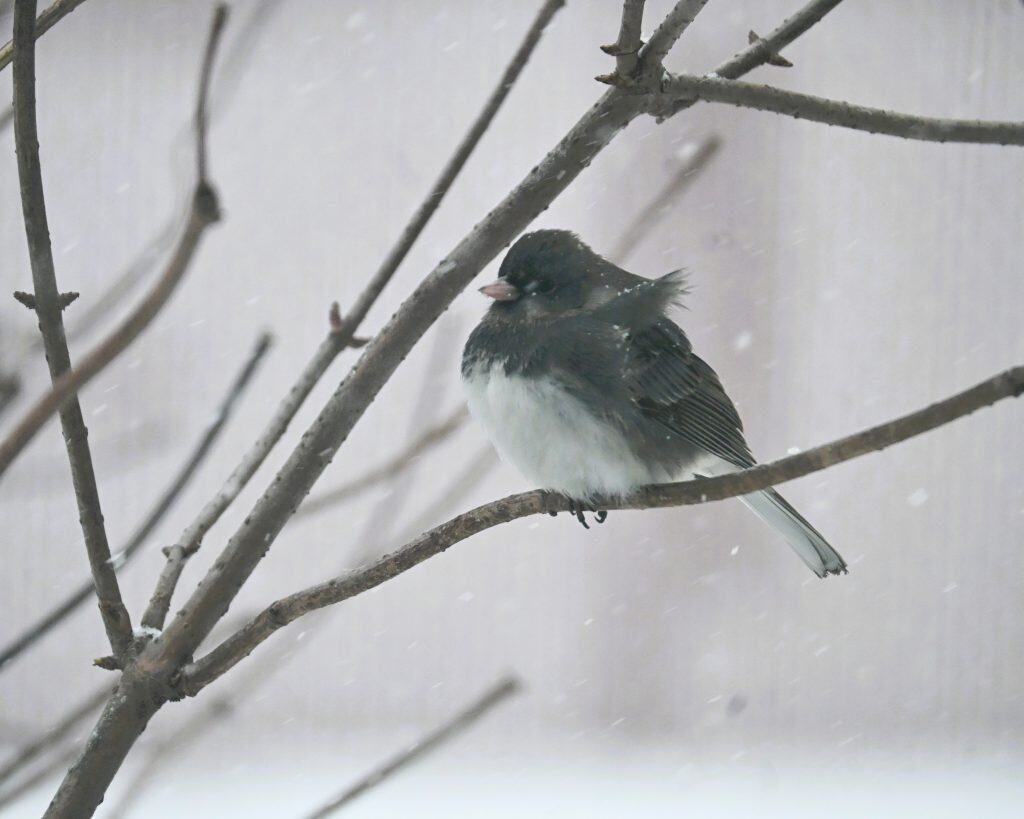

Here’s what’s blooming in town this week to make your walks more enjoyable
By Laura Eisener
Even more snow fell this week than last. On the slope beside Hurd Avenue, many families gathered to slide down the snow on sleds, toboggans and flying saucers. Piles of snow left by the plows became conical mountains to be climbed. Since this snow was light and fluffy, it did not do a lot of damage to tree branches and power lines. Given the low temperatures we have had this week, it did provide significant insulation to low shrubs and ground covers that were blanketed in the snow. Certain shrubs, such as many Hydrangea varieties, especially bigleaf hydrangea (Hydrangea macrophylla), will more likely bloom on branches where buds were insulated by snow than on branches that extend beyond the snow cover. On the other hand, temperatures in the single digits on Saturday before there was much snow cover may already have done some damage to some of those buds.
The week coming up has its share of events and holidays that involve nature. Our snowy landscapes will reflect the bright glow from the full moon on February 1 unless the clouds obscure it. February’s full moon is appropriately enough known as the snow moon, and there is more snow expected that day.
In 2026, Tu Bishvat (also spelled Tu B’Shvat) begins at sundown on Sunday, Feb. 1 and ends at sundown on Monday, Feb. 2. Tu Bishvat, usually described as “New Year for Trees” or “The Birthday of the Fruit Trees,” is a minor Jewish festival that can be observed in various ways. One way is by expressing appreciation for food crops and plants in general, or trees in particular. In much milder climates, it may be a day for planting new trees, although here in Saugus this week it is not easy to even find the ground surface let alone dig in the frozen soil.
Other ways to observe the holiday include donating money to plant a tree in Israel. Hadassah, a Jewish women’s organization in the United States, sells gift certificates for tree planting in Israel year-round for special occasions, such as weddings, birthdays, memorials or other occasions. This is done in collaboration with Jewish National Fund-USA, which began over 100 years ago to replenish the native vegetation of the Holy Land that had been destroyed or had disappeared. Species that are emphasized include olive, pine, cypress, tamarisk, acacia and carob trees. While for us the holiday falls in the deep winter when we are more likely to see snow than blossoms, in Israel the almond trees are often in bloom and the ground is workable.
Feb. 2 is also World Wetlands Day. Celebrated on this date since the 1990s, World Wetlands Day reminds people of the significance of wetlands and the need to protect them from destruction as a result of filling, pollution, development, etc. Rumney Marsh on the border of Saugus and Revere is a good example of a significant coastal wetland that was altered by development in the 20th century but saved from complete destruction.
The best-known holiday that falls on February 2 is Groundhog Day. This would be a bad week for a groundhog to emerge, because it would need to dig an extra two feet or so through the snow.
February 3 is Feed the Birds Day. The deep snow cover makes it difficult for birds to find some of their favorite foods, especially those who like to forage on the ground. Some bird foods like small fruits may be close to depleted as we get closer to spring or have become dry and shriveled, which could make them less appetizing. Very few insects are available. Birds and other wildlife need fatty foods to stay warm. Fluffing up their feathers, like the dark-eyed junco (Junco hyemalis) is doing above, helps increase their insulation value to keep the birds warm in cold temperatures. February 3 is halfway between the winter solstice and the spring equinox on March 20, so winter is halfway over!
Editor’s Note: Laura Eisener is a landscape design consultant who helps homeowners with landscape design, plant selection and placement of trees and shrubs, as well as perennials. She is a member of the Saugus Garden Club and offered to write a series of articles about “what’s blooming in town” shortly after the outbreak of the COVID-19 pandemic. She was inspired after seeing so many people taking up walking.