English
 Spanish
 Portuguese
 Arabic
 Haitian Creole
 Chinese (Traditional)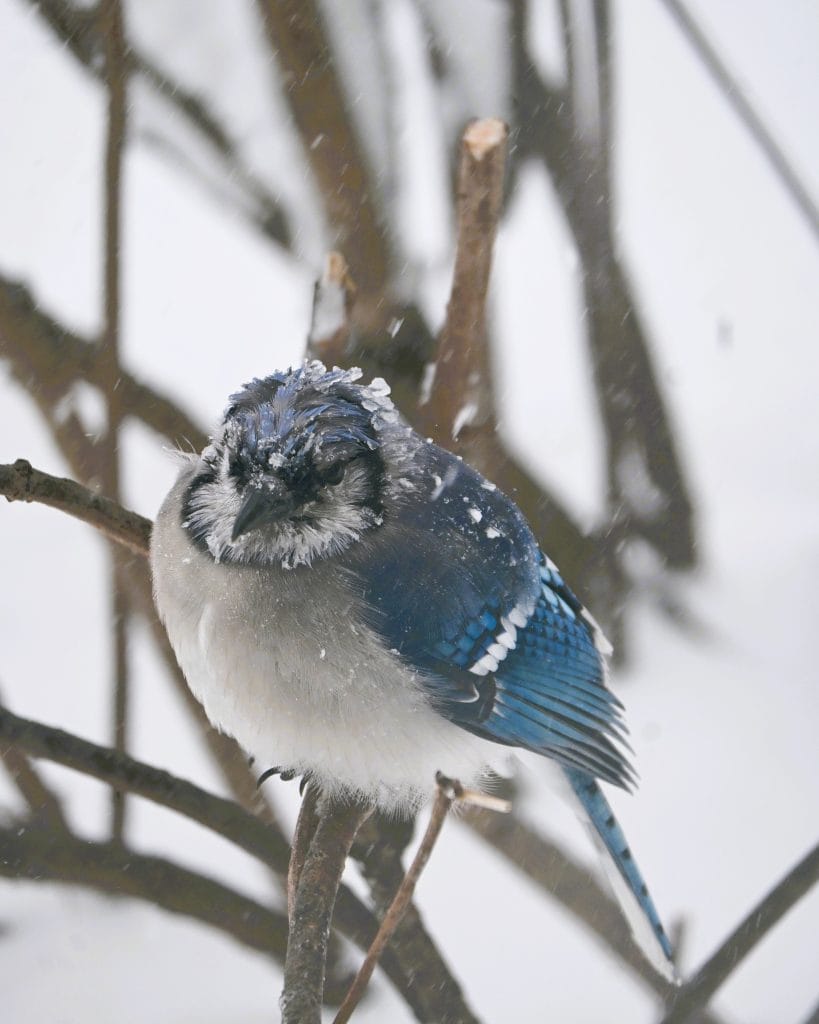

Here’s what’s blooming in town this week to make your walks more enjoyable
By Laura Eisener
Among the interesting things mentioned in the closing ceremony of the 2026 Olympics last Sunday were the comments on gratitude for water, especially the more solid forms of it, snow and ice, since this element is necessary for all of the Olympic winter sports. While most of us might have felt appreciative if we got a little less snow, schoolkids in Saugus might have been thankful since they got an extra couple of snow days falling on top of their February vacation week.
The weather has been rough on wildlife, as the deep snow makes it much more difficult for many animals to search for food or to escape predators. Over the weekend I saw a few birds of prey at the Saugus Iron Works: a turkey vulture (Cathartes aura) using the chimney as a lookout perch, and a hawk up in a tree somewhat farther away. On Monday, a red-shouldered hawk (Buteo lineatus) caught its lunch in my front yard and ate some of it before flying off with the rest to its nest. Several of the birds at my feeder kept shaking their heads during the storm as the snow got in their eyes, and all of the blue jays were having “bad feather days” from bits of ice entangled in their crest feathers. The jays kept rubbing their heads against tree branches to scrape the ice pellets off as they checked out their surroundings during the storm.
While in some years you might see a few plants blooming in late February, such as snowdrops (Galanthus nivalis) and Lenten roses (Helleborus orientalis), the plants are still dormant under all this snow. Still, unseen things are beginning to happen in the plant world. Many woody plants are beginning to come out of their winter dormancy due to the warming daytime temperatures, and sap has started running. Pressure builds in the sap vessels of the tree; if they encounter a hole in the bark, such as one drilled in a maple tree, some of the sap will run out.
While many tree species have increased sap running in the spring, only a few tree species have sap that is sweet and flavorful enough for people to go to the effort of collecting. The best-known is the sugar maple (Acer saccharum), which grows best in northern New England. Other tree species can also produce a sweet sap, such as walnut, although walnut trees have a lower concentration of sugar in the sap so syrup production for human use is much less efficient. Common walnut (Juglans regia) and our native black walnut (Juglans nigra), as well as other walnut species, can produce a sweet syrup if the sap is boiled down. Cornell University has conducted studies of walnut sap production and found it had a sweet, nutty flavor that taste testers liked, although it has not yet had great commercial success. Birch sap, collected mostly from black birch (Betula nigra), has a distinctive flavor and has been used in the making of birch beer, a soft drink, and when fermented can be made into birch wine.
Spring’s approach is obvious through the lengthening of days, but this coming week we have another good reason to look skyward. On Tuesday, March 3, we may observe the full moon, known as the worm moon, which coincides with a lunar eclipse around dawn on that day. The peak time of the eclipse is 6:33 a.m.