English
 Spanish
 Portuguese
 Arabic
 Haitian Creole
 Chinese (Traditional)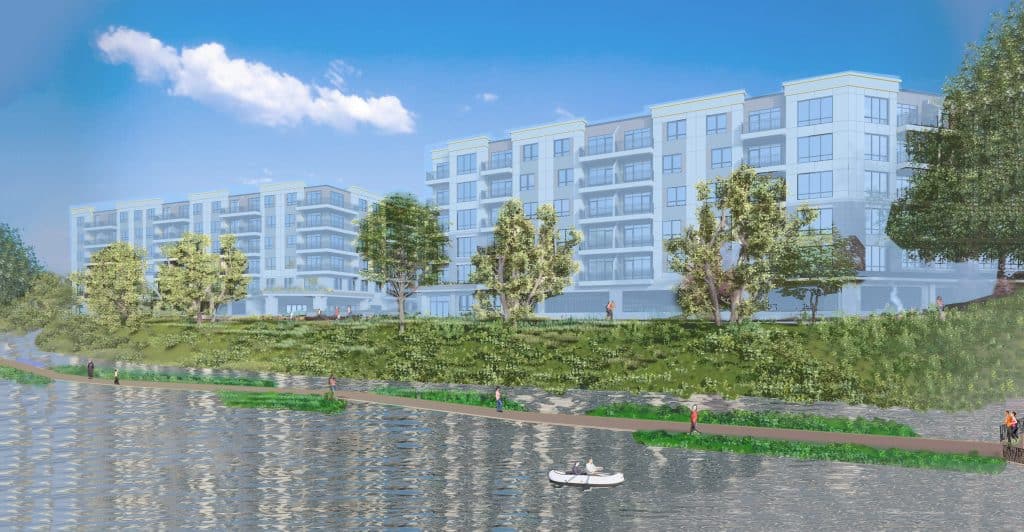

Funds secured by McGonagle approved by City Council
On April 2, 2026, State Representative Joe McGonagle was pleased to announce that funding secured from the Commonwealth designated for the design and permitting of a floating boardwalk along the Malden River has been approved by the City Council. This project has been part of the environmental efforts by the City of Everett to improve outdoor spaces and increase accessibility. The proposed boardwalk — based off the mile boardwalk in the Chicago River — would connect the Rivergreen trail system to the Village Landing Park walking trail. Additionally, the project would add floating wetlands to help clean the river.
“Building on our success of installing a dock and kayak launch,” said McGonagle, “we are looking to take advantage of Everett’s waterfront so that all may enjoy it. I am ecstatic we have made progress towards improving this area and I can’t wait to watch it flourish. I owe a big thank you to Tom Philbin, Environmental Planner & Sustainability Coordinator for the City of Everett. None of this would be possible without his vision and hard work.”
The floating boardwalk is an innovative solution that connects Rivergreen Park and Village Landing Park while improving access to the river in a way that works with nature — not against it. For many years, plans to link these riverfront parks and connect to the Northern Strand Community Trail have faced major challenges, including steep riverbanks and privately owned land. Earlier concepts required significant construction, such as large retaining walls and property acquisition, which would have disrupted valuable riverbank habitat. This project takes a different approach. By using a floating boardwalk system — similar to the existing rowing dock — the city can provide safe, continuous public access without altering the natural shoreline.
Just as importantly, the boardwalk introduces new ecological benefits. Because river level fluctuates due to dam operations, it has been difficult for certain wetland plants — called Emergents “plants with wet feet” — to thrive along this stretch of river. These plants are essential: They help filter water, provide habitat for fish and amphibians and support a healthy ecosystem. By integrating floating wetlands into the boardwalk design, this project creates space for these important plant communities to grow. Similar systems have been successfully implemented elsewhere, including Chicago’s “Wild Mile.”
The result is a more complete and resilient river ecosystem — one that people can safely experience up close. Visitors will be able to walk alongside native plantings, observe wildlife and better understand their role as stewards of the river.
In addition to its environmental benefits, the boardwalk strengthens neighborhood connections. It creates a continuous pedestrian and bicycle link between parks and aligns with future redevelopment opportunities along the river, improving everyday access while enhancing the overall character of the area.