English
 Spanish
 Portuguese
 Arabic
 Haitian Creole
 Chinese (Traditional)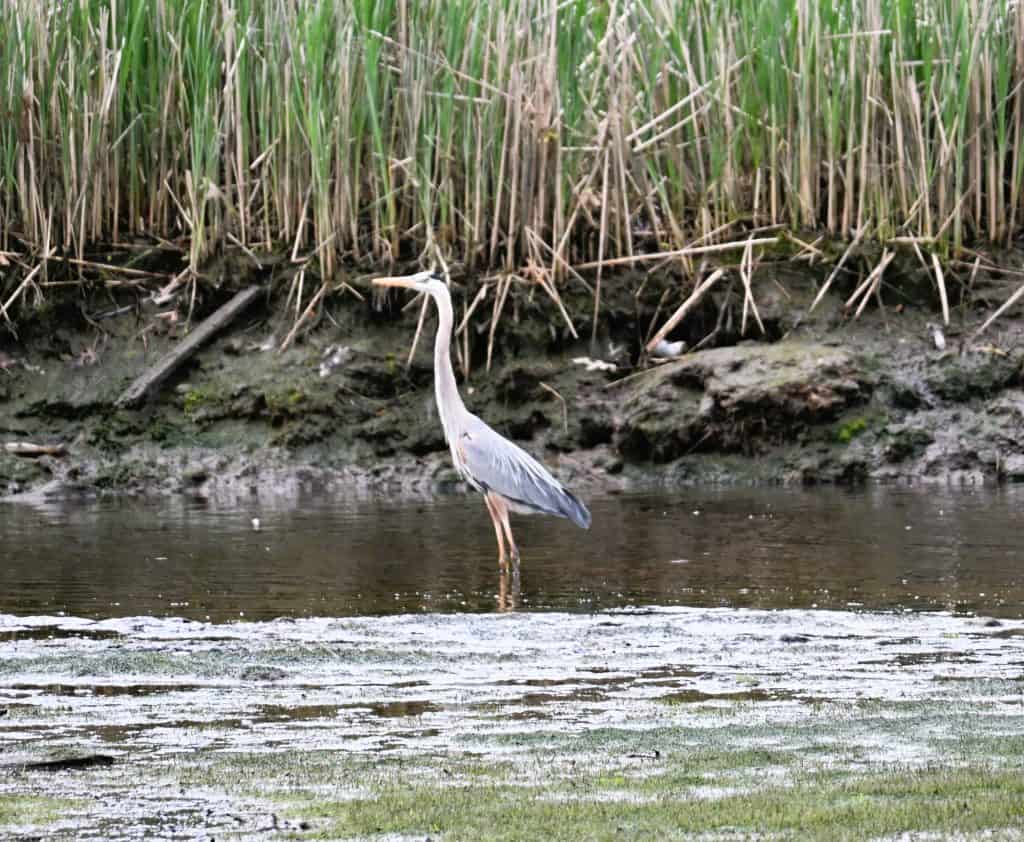

Here’s what’s blooming in town this week to make your walks more enjoyable
By Laura Eisener
Pagoda dogwood or alternate leaved dogwood (Cornus alternifolia) is a dogwood tree native to the northeast U.S. that is less well-known than flowering dogwood (Cornus florida) or Kousa dogwood (Cornus kousa). Unlike these two species, it does not have the showy pink or white bracts that accompany the flower clusters on these other two. However, it does have some decorative characteristics of its own. Its actual flowers are white, and while the individual blossoms are small the abundant cymes are usually about 2 ½ inches across, which makes them quite noticeable. The twigs have a reddish cast, which will remind you of several other dogwood species: the shrubby red twig dogwoods, such as red osier dogwood (Cornus sericea) and Tatarian dogwood (Cornus alba or C.tatarica). While the branches of pagoda dogwood are a little more subtly colored, this is a factor that does tend to stand out in the leafless season. Its leaf arrangement is a bit of an anomaly in the genus, as most dogwood species have opposite bud arrangements. The common name Pagoda Dogwood comes from the horizontal branching form, which to some resemble the wide roofs of a pagoda. The natural range of this tree is most of the eastern half of the United States from Maine to Florida, and several Canadian provinces as well. The flowers support pollinators and the small fruits support many birds, including cardinals and robins, and the horizontal branch arrangement makes good nesting sites. In fall, the leaves turn a nice burgundy color. It is surprising that this tree is not more often planted.
I have received several questions this week about the white flowering tree black locust (Robinia pseudoacacia) blooming in many locations in Saugus, especially along Route 1. There is also a large specimen near the corner of the ITAM parking lot and in the grassy area behind Walnut Place. If you get a close look at the flowers, you might correctly guess that this is a member of the pea family (Fabaceae). Like some other members of this family, nodules on its roots are able to fix nitrogen in the soil, so it can grow in very poor soil without needing fertilizer. This has enabled it to naturalize in many places outside its natural range, and it has been declared invasive in Massachusetts, where it is native, as well as in some locations in Europe and Africa, where it was once deliberately planted.
The locust flowers are very fragrant and attract many pollinators. Later the seeds, produced in small pods, provide food for birds and wildlife. Its wood is known for being very strong and rot resistant, popular for fence posts and other outdoor applications. Formerly planted on steep slopes for erosion control, because of its rapid growth and ability to reproduce by suckering, or sprouting at the base of trees, it is no longer legal for nurseries to sell it. At this time of year, it is easy to recognize because of the flowers. You will also see a variety with pink blossoms in a few places in town, especially around Lynn Fells Parkway.
Birds have been gradually returning north in recent months, including the great blue heron (Ardea herodeas). Herons and egrets are regular visitors now to the Saugus River and nearby ponds. They are often viewed wading in the river or perched in trees near the Saugus Iron Works and flying across Route 1 to reach other nearby ponds and waterways.